Source Nebulizing Tower Scent Oil Diffuser for Hotels
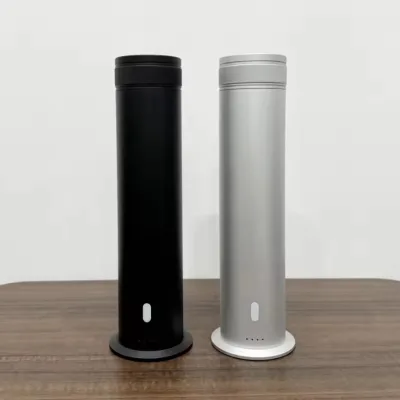
Find and compare 29 nebulizing tower scent oil diffuser models for hotels, homes, and commercial spaces. Evaluate options ranging from tabletop to floor-standing designs with varying tank capacities, power types, and control modes to match your specific scent distribution needs.
Key considerations
Products List





Comprehensive Sourcing Guide
Nebulizing Tower Scent Oil Diffuser Sourcing Guide
Buyers evaluating nebulizing tower scent oil diffusers must first distinguish between tabletop and floor-standing configurations, as the observed market data reveals distinct operational profiles for each. The available listings indicate a split between portable units designed for hotel rooms and larger floor-standing models intended for commercial spaces, with power requirements ranging from DC 5V to 12V depending on the specific form factor. This distinction is critical because the physical footprint and power delivery needs directly impact installation logistics and electrical infrastructure requirements in the target facility.
Procurement teams should also scrutinize the customization options and control modes listed in the product specifications to ensure alignment with brand identity and user experience goals. The data shows that while some units offer simple button controls, others feature digital or touch interfaces, and customization is explicitly available for certain models. This variability allows buyers to tailor the aesthetic and functional output of the diffuser, but it necessitates a clear definition of requirements before engaging with suppliers to avoid mismatches between the ordered specification and the delivered hardware.
Product Scope and Observed Listing Signals
The observed product range includes specific models like the KAL P20 Pro and J30 Pro, which demonstrate significant variance in water tank capacity and spray volume metrics. Buyers must verify whether the unit requires a 320ml or 180ml tank, as this directly influences the frequency of refilling and the suitability for high-traffic areas versus private suites. The listing signals also highlight differences in material composition, with options ranging from plastic and PP to sheet metal and ABS bodies, which affects durability and the perceived quality of the final installation.
Commercial listings indicate a wide range of packaging and shipping dimensions, with some units packed in boxes of fifty while others are shipped in smaller quantities of four pieces. This variation in packaging density impacts freight costs and storage requirements, making it essential for buyers to calculate the total landed cost based on the specific model's packing dimensions rather than assuming a standard container load. Additionally, the presence of specific weight metrics, such as a net weight of 0.545kg versus 4.83kg, serves as a proxy for the internal component density and motor power, which buyers should correlate with their desired noise levels and mist output.
Technical Specifications to Verify
Verification of operating voltage is the primary technical step, as the market data presents conflicting values including DC 5V, 12V, and 5.0V across different product lines. Buyers must confirm the exact voltage requirement for the specific model to ensure compatibility with existing power sources, particularly in hotel environments where standard outlets may differ from industrial 12V systems. The maximum power ratings observed, ranging from 12W to 17W, further indicate the energy consumption profile, which is a key factor in calculating long-term operational costs and heat generation within the device.
Spray volume and control mechanisms require precise validation to match the intended scent distribution strategy. The data shows spray volumes varying from 0.0277ml per 10 seconds to 2-3.8ml per hour, alongside control modes that include button, digital, and touch interfaces. Buyers should request detailed performance curves for the specific model to understand how the spray volume correlates with the timing function and whether the digital control allows for programmable intervals. This technical granularity ensures the diffuser can be calibrated to maintain consistent fragrance intensity without over-saturating the space or wasting oil.
Compliance and Safety Documentation
Safety documentation must explicitly address the electrical standards applicable to the specific voltage and power rating of the selected unit. While general industry standards like ISO9001 are often cited in the broader market, buyers should demand evidence of compliance with the specific implementation standards listed, such as G84706.1-2005, which governs the safety of the electrical components. It is crucial to verify that the supplier provides test reports confirming the device meets these standards for the specific operating voltage, as a mismatch could lead to safety hazards or regulatory non-compliance in the destination market.
Certification status regarding materials and electrical safety should be confirmed through third-party testing reports rather than relying on general claims. The product materials, including ABS, PP, and sheet metal, must be verified for fire resistance and chemical stability, especially given the proximity of the device to oil reservoirs and electrical heating elements. Buyers should ensure that the supplier can provide documentation for the specific batch of goods, confirming that the materials used in the body and bottle meet the necessary safety thresholds for commercial use in hotels and homes.
Cost Drivers and Commercial Terms
The cost structure for these diffusers is heavily influenced by the complexity of the control mode and the material composition of the housing. Units featuring digital or touch controls and constructed from sheet metal or multi-material combinations typically command higher prices than basic button-controlled plastic models. Buyers should analyze the price range of 0-205 USD in the context of these feature sets, understanding that the lower end of the spectrum likely corresponds to simpler, smaller capacity units while the higher end reflects advanced features and larger water tanks.
Minimum Order Quantity (MOQ) and packaging configurations are significant variables that affect the total procurement budget and inventory management strategy. The observed MOQ range of 1 to 100,000 units suggests that suppliers offer flexible terms, but the specific packaging, such as fifty boxes per carton versus four pieces per carton, dictates the efficiency of the supply chain. Buyers must negotiate terms that align with their storage capabilities and cash flow, ensuring that the chosen MOQ does not result in excessive inventory holding costs or stockouts due to inflexible shipping constraints.
Supplier Qualification and Quality Control
Supplier qualification should focus on the ability to provide consistent customization and adherence to the specific product standards listed in the catalog. Buyers must verify that the supplier has the manufacturing capacity to handle the specific model numbers, such as the Meng 5 or J30 Pro, and can maintain the precise dimensions and weight specifications required for the final product. The presence of a specific origin, such as Jiangsu, China, indicates a manufacturing hub, but buyers should still audit the facility to ensure that the production processes for sheet metal and plastic components meet the required quality benchmarks.
Quality control protocols must include rigorous testing of the spray volume consistency and the durability of the control mechanisms. Since the data indicates varying spray volumes and control modes, buyers should implement a sampling plan that tests the actual output against the claimed specifications, particularly for the timing function and digital control accuracy. It is essential to establish a clear acceptance criteria for the product net weight and water tank capacity, as deviations in these areas can indicate manufacturing inconsistencies that affect the performance and longevity of the diffuser in the field.
Long-Term Procurement Checks
Long-term procurement success depends on the supplier's ability to maintain consistent supply of replacement parts and accessories, such as charging cables and hooks. The product standards list specific components like the bare unit, manual, and charging cable, and buyers should ensure that the supplier guarantees the availability of these items for the entire lifecycle of the product. This is particularly important for floor-standing models with higher power ratings, where the failure of a single component could render the entire unit inoperable and disrupt the scenting schedule in a commercial environment.
Buyers must also establish a feedback loop for monitoring performance metrics like spray volume degradation and material wear over time. The observed data includes specific consumption rates and weight metrics that serve as baselines for long-term performance evaluation. Regular audits should be conducted to ensure that the diffusers continue to operate within the specified parameters, and any deviations should trigger a review of the supplier's quality control processes to prevent recurring issues that could impact the brand reputation of the end user.
FAQs
What power types are available for these diffusers?
These diffusers utilize either battery or electric power types to operate effectively in various settings. Battery-powered models offer portability for tabletop use, while electric options provide consistent performance for floor-standing installations. The choice depends on whether you need cordless convenience or continuous operation for hotel and home environments.
How does the spray volume differ between models?
Spray volume varies significantly across models, ranging from 0.0277ml per 10 seconds to 2-3.8ml per hour. Some units consume fuel at 2ml per hour, while others deliver precise misting at 0.1ml per time. This variation allows buyers to select the appropriate output intensity for specific room sizes and scent dispersion requirements.
What is the water tank capacity for these units?
Water tank capacities range from 90ml to 500ml depending on the specific model selected. Smaller units like the Meng 5 feature a 90ml tank, while larger floor-standing models offer a 500ml capacity. This range supports both short-term portable use and extended operation in commercial spaces without frequent refilling.
Can these diffusers be customized for specific branding?
Yes, customization is available for these nebulizing tower scent oil diffusers. Buyers can request specific modifications to meet unique branding or functional needs. This service allows businesses to tailor the product appearance or features, ensuring the diffuser aligns with their corporate identity or specific operational requirements in hotels and homes.
What materials are used in the construction of these diffusers?
These diffusers are constructed from various materials including plastic, PP, ABS, PET, and sheet metal. The body and bottle materials vary by model, with some using ABS for the body and PET for the bottle. Sheet metal is used in heavier industrial-style units, ensuring durability and aesthetic appeal for different environments.
What control modes are supported by these devices?
These devices support button control, digital control, and touch control modes. Button control offers simple manual operation, while digital and touch controls provide more advanced functionality. The choice of control mode depends on the user preference for interface simplicity or modern smart features, enhancing the user experience in both residential and commercial settings.